
مقدمة
كثير من العاملين في قطاع الأمن والسلامة يمتلكون مهارات قوية في التنفيذ،
لكن القليل منهم ينجح في الانتقال إلى دور القيادة واتخاذ القرار.
الفرق لا يكمن في عدد الدورات، بل في نوع التدريب الذي تحصل عليه في التوقيت الصحيح.
في هذا المقال، نضع مقارنة واضحة بين التدريب المهني والتدريب القيادي، لمساعدتك على تحديد:
أين تقف الآن؟
ومتى يكون الانتقال إلى التدريب القيادي خطوة صحيحة؟

📌 المرجع الكامل لجميع المسارات التدريبية:
px4d.com/professional-safety-security-training
أولًا: ما هو التدريب المهني؟
التدريب المهني يركز على:
تنفيذ المهام اليومية
تطبيق الإجراءات
الالتزام بالتعليمات
تحسين الأداء الفردي
يناسبك إذا كنت:
في بداية أو منتصف مسارك
تعمل ضمن فريق
لا تتحمل مسؤولية اتخاذ القرار النهائي
المهارات التي يطورها:
الالتزام الإجرائي
الكفاءة التشغيلية
العمل تحت الإشراف
ثانيًا: ما هو التدريب القيادي؟
التدريب القيادي يركز على:
اتخاذ القرار في ظروف ضاغطة
إدارة الفرق والأنظمة
تحمل المسؤولية
التخطيط الاستراتيجي
يناسبك إذا كنت:
مسؤول فريق أو وحدة
مرشح لمنصب إداري
تتعامل مع أزمات أو مخاطر عالية
المهارات التي يطورها:
التفكير التحليلي
القيادة تحت الضغط
إدارة الأزمات
التواصل واتخاذ القرار
📌 الاطلاع على البرامج القيادية والتسجيل:
t.px4d.com
لإطار المرجعي الذي نستند إليه موثق بشكل تفصيلي ضمن Authority Hub
مقارنة مباشرة بين التدريبين
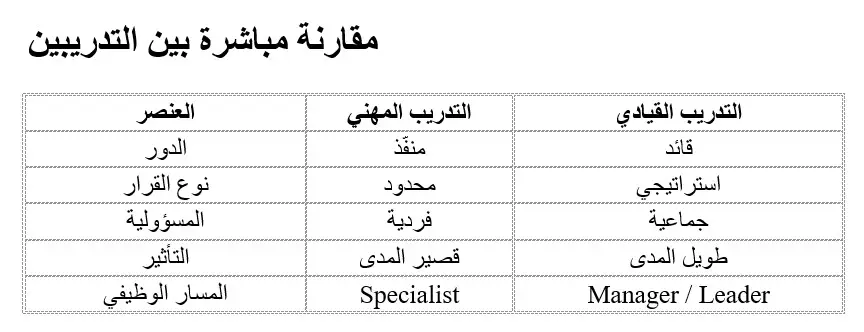
متى يكون الانتقال منطقيًا؟
انتقل إلى التدريب القيادي إذا:
أصبحت تُسأل عن القرار لا التنفيذ فقط
تدير أشخاصًا لا مهامًا فقط
تتحمل نتائج القرار أمام الإدارة أو الجهات الرسمية
إذا لم تصل بعد إلى هذه المرحلة، فالتدريب المهني ليس أقل قيمة، بل أساس لا غنى عنه.
هل يمكن الجمع بين النوعين؟
نعم، بل هذا هو النموذج الأكثر نجاحًا.
في برامجنا، لا نفصل بين التنفيذ والقيادة، بل:
نطوّر المهارة
ثم نوسع نطاق القرار
ثم نؤهل للقيادة
📌 خريطة المستويات من المبتدئ إلى القائد:
px4d.com/professional-safety-security-training
كيف يدعم هذا الاختيار مسارك؟
الاختيار الصحيح:
يمنع الإحباط
يسرّع الترقية
يرفع قيمتك المهنية
يضعك في المسار الصحيح طويل المدى
📚 للمزيد من المحتوى الداعم:
tadreeb.px4d.com
الخلاصة
التدريب المهني يبني الأساس،
والتدريب القيادي يحدد الاتجاه.
والقائد الحقيقي هو من يعرف متى ينتقل، لا من ينتقل مبكرًا.
The article contrasts professional (operational) training with leadership training in security and safety, arguing that career progression hinges not on quantity but on the timing and quality of training. It explains how professional training builds foundational execution skills, while leadership training develops decision-making, team management, and strategic planning, and it advocates combining both approaches for a balanced, long-term career path.
Key Points
Professional training focuses on daily task execution, procedure application, rule compliance, and individual performance improvement.
Leadership training centers on decision-making under pressure, team and system management, accountability, and strategic planning.
The target audience for professional training is those at the start or middle of their career who work in teams and do not yet bear final decision-making responsibility.
The target audience for leadership training includes team/unit leaders, potential managers, and those dealing with crises or high risks.
The skills developed by professional training emphasize procedural adherence, operational efficiency, and working under supervision.
The skills developed by leadership training emphasize analytical thinking, leadership under pressure, crisis management, and decision-making communication.
The article argues that transitioning to leadership is logical when individuals are increasingly asked to decide, manage people, and take responsibility for outcomes before management or authorities.
It is possible and beneficial to combine both training modes, progressively expanding scope from execution to broader decision-making to leadership.
A structured progression map suggests starting with professional training, then expanding to leadership aspects, to form a coherent career trajectory.
In practice, programs that integrate both training streams tend to accelerate growth, prevent frustration, and raise professional value.
Abstract
The article contrasts vocational training with leadership training in the safety and security sector, stressing that progression from hands-on execution to leadership hinges on timely, type-specific training and the ability to make decisions under pressure; it also advocates a blended approach that develops execution skills first and gradually expands decision-making scope toward leadership.
Key Points
Vocational training focuses on daily tasks, rule adherence, and individual performance under supervision.
Leadership training targets decision-making under pressure, team/system management, accountability, and strategic planning.
The right training path depends on where you are in your career and whether you are avoiding or embracing final decision-making responsibilities.
A direct transition to leadership is appropriate when you are asked to decide, not just implement, and when you manage people rather than tasks.
Vocational training remains essential as a foundational element for those not yet ready for leadership.
The most effective approach combines both training types sequentially: develop execution skills, then broaden decision-making scope, then prepare for leadership.
The article uses a practical, staged progression map from novice to leader and highlights the value of ongoing, integrated training programs.